2026-10-21 ·
Troubleshooting Refrigerator Cooling Issues During Redwood City Heat Waves
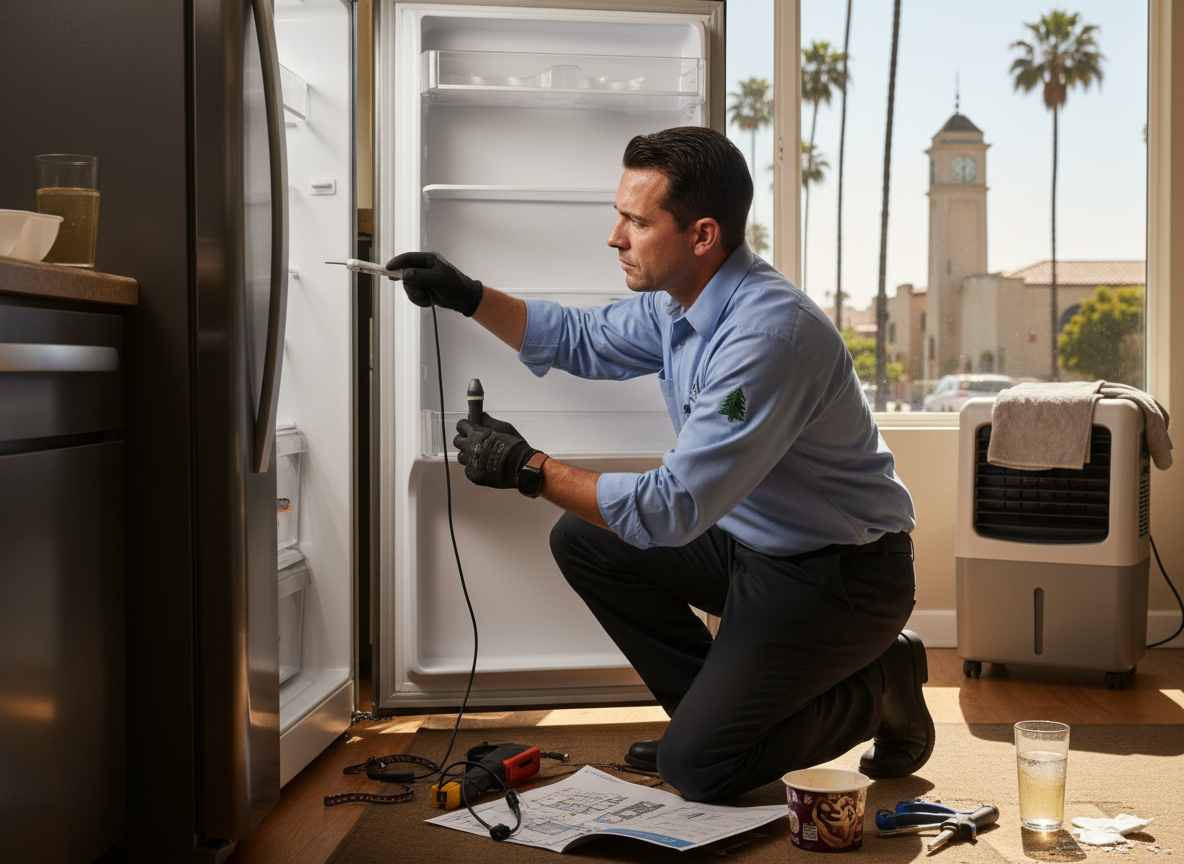
During Redwood City heat waves, refrigerators lose cooling efficiency once outside temperatures climb above 85°F for more than a few hours, often because condenser coils cannot reject heat fast enough in older homes found in Downtown Redwood City and North Fair Oaks. Start by confirming the unit maintains 35–38°F in the fresh-food section and 0–5°F in the freezer; if either range drifts, inspect the door gaskets for gaps, clean the coils, and verify the thermostat setting before assuming a compressor fault.
How Local Climate and Housing Stock Affect Cooling Performance
Redwood City's mild Mediterranean climate keeps summers cool and foggy most years, yet occasional heat waves still hit homes built before 1980 in North Fair Oaks and around the Redwood City Courthouse. These older single-family houses often lack modern insulation and place refrigerators against exterior walls that absorb afternoon sun, raising ambient temperatures around the appliance by 10–15°F. In contrast, newer units in Redwood Shores and Woodside Plaza sit in better-shaded kitchens and handle spikes more easily. The result is faster ice buildup on evaporator coils and longer compressor run times that can shorten overall lifespan to 8–12 years instead of the typical 13–15. Residents in nearby Menlo Park and Belmont report the same pattern when coastal fog fails to arrive by midday.
Step-by-Step Checks for Door Seals and Temperature Settings
Begin troubleshooting by running a dollar-bill test along each gasket edge; resistance should feel even, and any weak spots indicate replacement. Next, confirm the refrigerator sits level so doors close fully—an issue common on sloped lots near Cañada College. Adjust the temperature dial only after the unit has run 24 hours at the new setting; most models need 37°F fresh food and 0°F freezer during heat waves. Avoid frequent door openings in the late afternoon when outdoor temps peak. If the compressor still cycles every few minutes without reaching set points, note the exact temperatures and call a technician rather than continuing adjustments that can mask a failing start relay.
Cleaning Coils and Managing Heat Load in San Mateo County Homes
Condenser coils on the bottom or rear collect dust quickly in homes near Sequoia Station and Edgewood where construction dust and pollen remain airborne. Unplug the unit, pull it forward, and vacuum coils with a brush attachment every six months or before summer. Keep at least two inches of clearance behind the refrigerator and avoid placing it next to ovens or dishwashers that add extra heat. During a heat wave, reduce internal load by moving leftovers to a cooler or ice chest and limiting new warm items. These steps often restore normal cycling within one day. For persistent problems after cleaning, professional service is required to check refrigerant levels or fan motors.
Knowing When to Schedule Refrigerator Repair
If basic steps fail to restore cooling within 48 hours, contact Davis Appliance Repair for service available Mon–Sun 24/7 across Redwood City and San Mateo. Persistent high temperatures can spoil food quickly, especially in larger households. Technicians familiar with models common in the county can diagnose sealed-system leaks or control-board issues that DIY steps cannot reach. Readers facing related concerns during outages may also find value in Preventing Ice Maker Failures in Refrigerators During Redwood City Power Outages. For full refrigerator diagnostics, see refrigerator repair details covering San Mateo and surrounding cities.